Sports, nationalism, & the anthropological pursuit for home
The Buffalo Sabres lost in the seventh game of the second round of the Stanley Cup Playoffs. The last time this happened (making it to the second round) was 2007 when I was three, maybe four years old.
Since then, my hometown hockey team has played itself an extreme drought— a prohibition period where fate seemed to arrest any potential success for the team.
And this all matters, why?
Last time I wrote, I left with lice deciding my head would be their ecosystem and drawing a close to my time in Pakistan. Since then, I rested in Kuala Lumpur (Malaysia) for two weeks, hid out in San Francisco for a month, and surprised my parents for their Elvis Presley wedding in Las Vegas. I am now back in my birthplace in Buffalo, NY, perpetually insisting this stay will be temporary, while also reframing my relationship to this place that has held so much of my life.
Recognizing that I will be residing in Buffalo until opportunity strikes, I no longer want to see this as an insufferable stopover, but a chance to apply what I have learned from living across the globe.
White travelers are hilariously good at romanticizing “foreign” places, inviting things like food poisoning (or lice) to design their protected imagination of adventure. I say protected because the privilege of Western traveling audiences is well established and when things actually begin to go wrong, we always have the escape path of buying a new plane ticket and heading elsewhere. Similarly, the Western culture can lend itself to accidental and non accidental exotifications of non-Western places. This can start with unyielding assumptions, backed by arbitrary behavioral and cultural hierarchies, but exotification can also enter at more innocent points. When a (white/western) solo traveler insists everyone is so nice, that can very much be true, but it also does not acknowledge sub contexts that are missed in translation. I am sure people said less than kind things as I walked along streets (to me or to one another), but my inability to understand most of the local languages I am surrounded by makes me willfully unaware. I construct my own peace by turning language into background noise.
I will guiltily acknowledge my participation in romanticization and exotification, despite my continual strides to decolonize how I approach curiosity as something new (new for me, that is). That guilt also reproaches when I return home and feel versions of disgust as I see a country full of ignorance, conceit, and complaint about the privileges we hold so ungratefully. Yet, I also think this take towards my home is unfair—or, at least, lacking nuance. If I am so comfortable romanticizing or exotifying places that require my passport, then I wonder what insights I can gather from applying a similar lens to where I grew up.
One thing I do particularly well when abroad, is embracing celebrations of any shape and form. I label them as living cultural artifacts, and attending these traditions defines some degree of immersion. Yet, when returning home, I look down upon collective holidays as shallow and senseless excuses to celebrate (arguing that any day should be cause for undue cheer). My dismissal of days like Christmas, Halloween, New Years, or St. Patricks Day but embrace of Eid, Holi, or Chinese New Year is a hypocritical take I am now embarrassed to carry.
Which brings me back to the Buffalo Sabres.
With my newfound desire to repurpose the frameworks I use to engage in “foreign” places back to the United States, I am using the Buffalo Sabres as an entry point to developing this relationship and mitigate my current hypocrisies.
When I went to the Wagah Border in Pakistan and watched both Pakistan and India’s militaries high kick better than the Rockettes, I realized how much I enjoy over-exaggerated displays of nationalism. That being said, I have a full set of ethical qualms that remind me that as much as nationalism unifies people, it equally, if not more-so, is a divisive and violent technique.
So, the next best option must be sports. Sports enables a similar group loyalty while providing a (mostly) tasteful amount of banter towards the opposition. Lucky for me, Buffalo is a sports city, with strong fanbases that carry far beyond the stadium or arena boundaries. By having a Bills (American football team) patch on my jacket, a couple let me cut ahead of them in an airport line in Baltimore. By wearing a Bills hat in San Francisco, my dad got multiple chants from other Buffalo tourists roaming the city. Stranger danger ends where Buffalo sports begins.
Lucky for me, when I first returned to Buffalo, the Buffalo Sabres were doing unusually well, securing our spot in the Stanley Cup Playoffs for the first time in 15 years. It seemed this was the perfect opportunity to apply my “foreign-country-engagement” frameworks to my home context.
To discredit my academic-like pursuit for a moment, I would add that me showing an interest in Sabres hockey is not as arbitrary (and culturally conforming) as me shouting “Pakistan Zindabad” until my throat cut out at the Wagah border. I do have a prior exposure and enjoyment of the team and sport. My dad grew up playing hockey and consequently, I grew up watching hockey. I learned the Canadian national anthem before the US’s due to how often I went to the games growing up (Buffalo, sitting on the border with Canada, is one of the only teams in the NHL to always sing both the Canadian and US national anthem before the game; as such, knowing the Canadian national anthem is a telltale sign that a Buffalonian is also a Sabres hockey fan; as to why my younger self knew the Canadian anthem first, is because it’s the easier of the two to remember).
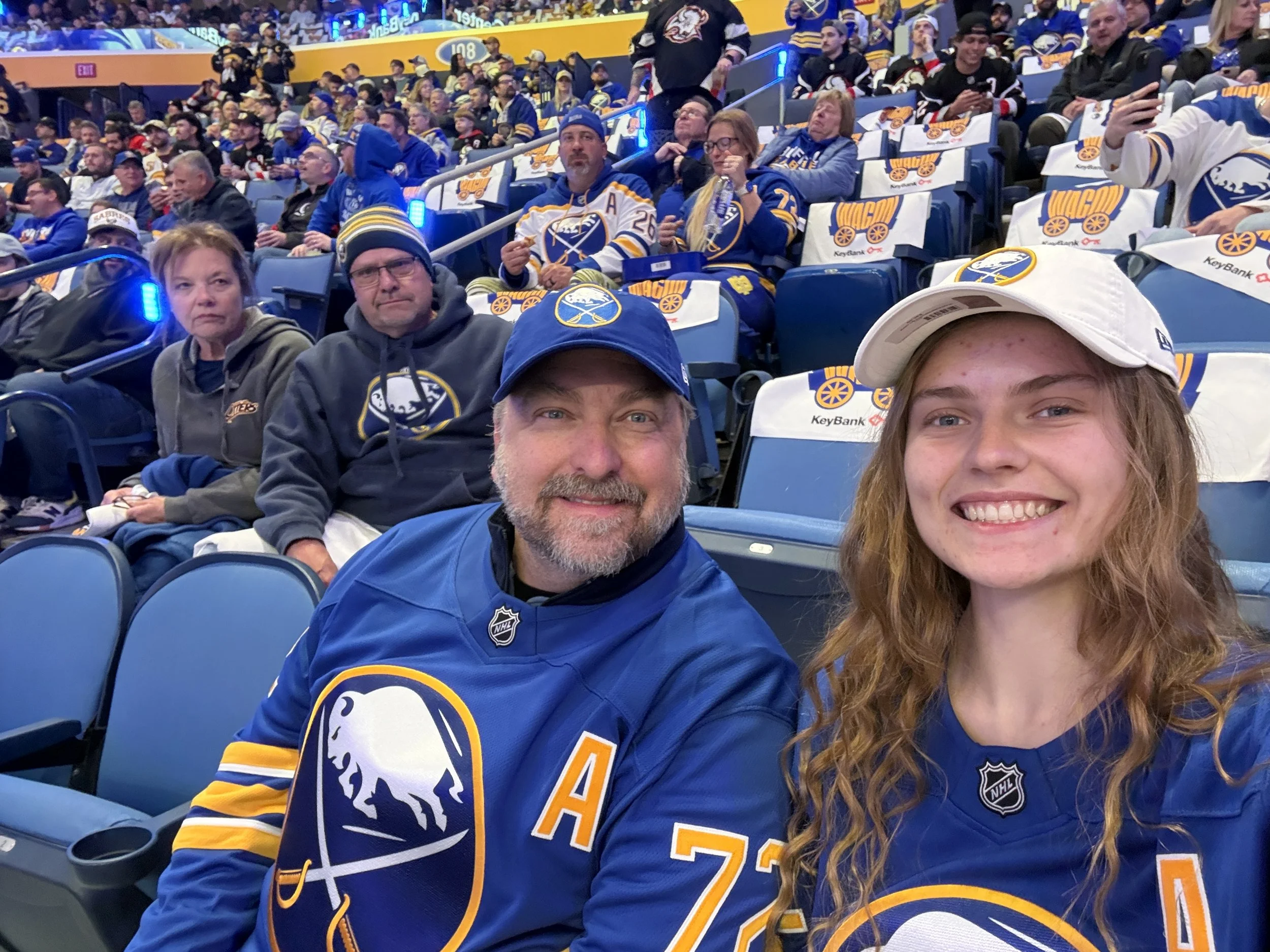
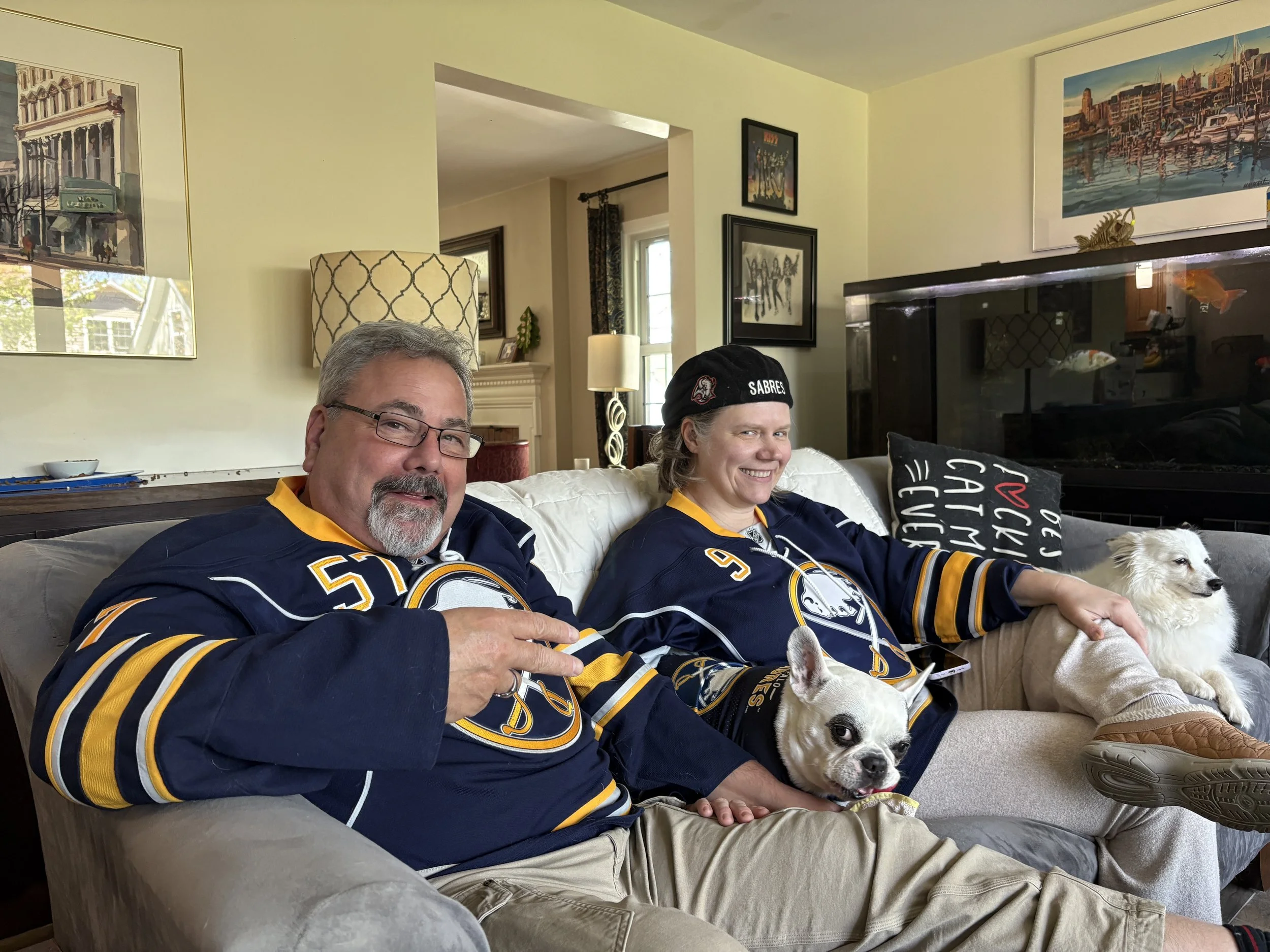
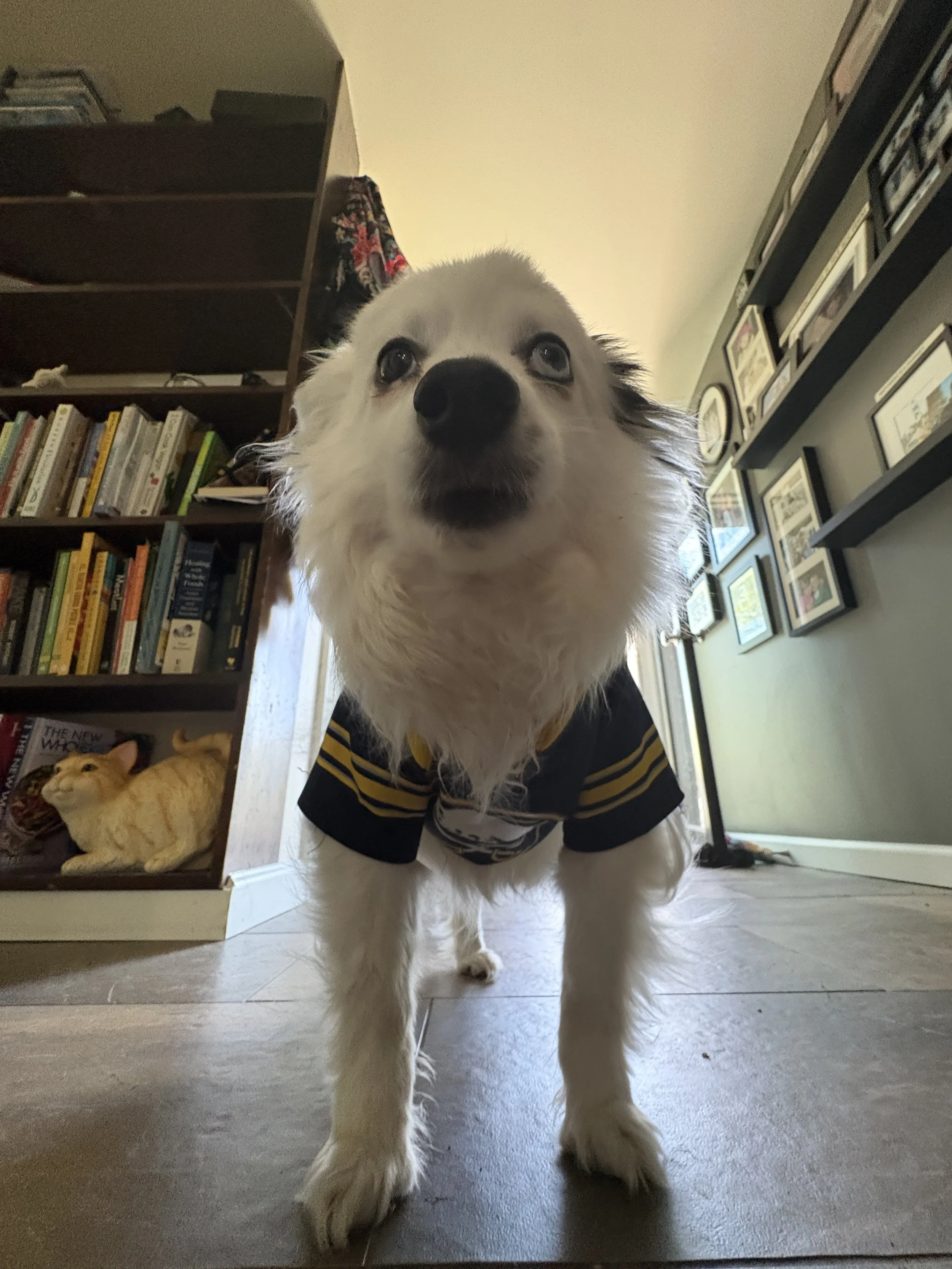
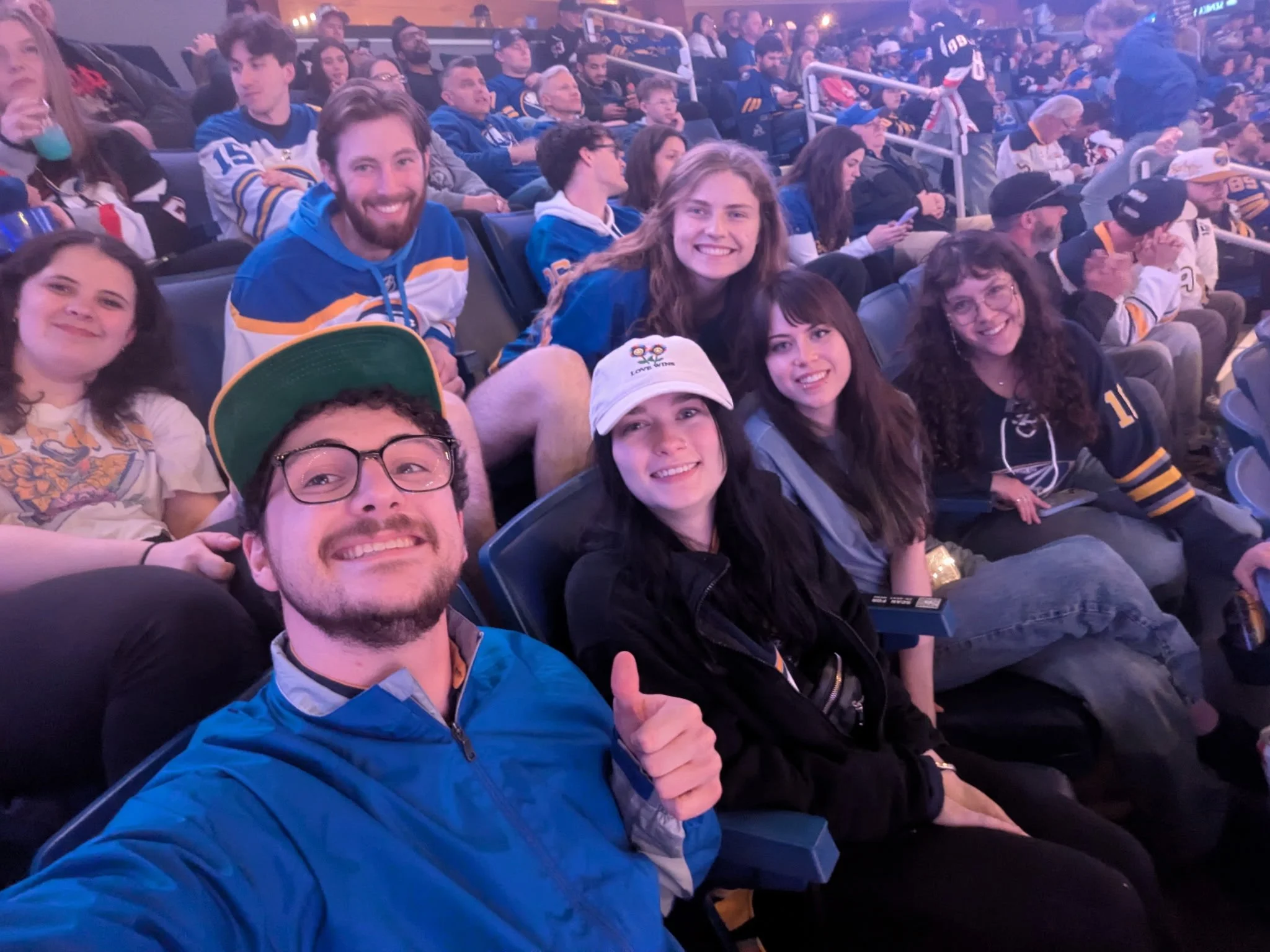
And so I began: I started watching the games from the living room couch, and then migrated to the arena when the opportunity arose (or the bar when I got boxed out of the family tickets). I bought a jersey to fit in with the crowd and studied the names and numbers of the notable players on the team. Dahlin, Thompson, Tuch, Greenway, Timmins, Quinn, Krebbs, McLeod (still don’t pronounce this one right). I got confused when the crowd booed when our goalie saved the puck, but I joined in when I realized they were actually saying the goalie’s last name: “Luuuuuukkkkk.” I roared when Lyon protected our net, leaving the house cat at home, and I started calling Benson a rat (I think he should have been a ferret) every time he scurried down ice to put pressure on the opposing team. I leaned into the rush every time the Sabres scored and sat in post-game-day depressions when we couldn’t land a win.
The thrilling moments expanded when I got to share the moment with a crowd, and even more-so when I cheered alongside family or friends. For a few of my friends, Buffalo sports is integral to their soul— a deeply set cultural element perhaps?
To a non-sports fan, all of the hype and disappointment can appear a bit silly. It looks like the boy’s version of brand loyalty given the amount of merchandise everyone owns and the amount of money spent on a visit to the arena for a game. Sometimes when I play sports, I think back to my Sims 4 world watching my sims toddle around the bowling alley (yes I had that extension pack!) and how ridiculous it looked, obsessing over balls going back and forth and back and forth, never leaving the alley, court, field, rink, etc. At the flesh, sports game are so purposeless to the development of humanity. The amount of money we spend on boys shoving each other into plexiglass walls and for referees to blow a bad whistle and ruin everyone’s day is astounding, edging on foolish. But perhaps, if I center back around my cultural lens, these sports stand-in for something much greater. The human capacity to unite around the same base game over and over showcases our tenacity and passion?
Sports are reliable in their world building, allowing viewers to revisit an expansive cast of characters they can follow for decades, or band around the league’s new protégée. Each game is the same, yet the storytelling differs each night— who wins, who loses, who is a victor, and who become a villain.
As I said to my friend one night while watching the Sabres game, “I would rather see our inter-community aggressions play out with a few fists exchanging on the ice than instigating war.”
Yes, that is a major sweeping statement with a million causal interactions missing, in between. But the idea is compelling: using sports as a means to exert angst within a mostly-civil and ruled game. Prioritize sports, deprioritize nationalism.
And then the Sabres’ series two playoff round began.
The Buffalo Sabres were set to play the Montreal Canadiens in a best of seven set. Over the course of the week, the two teams battled sharply, exchanging wins and losses quite evenly. For the most part, I respected the battle. Sure, the other team had some nasty stick slaps (Dobeš) and over exaggerations to try and get penalties called on us, but for the most part our team either regrouped or a whistle was blown and the referees called penalties on the play accordingly (including to our team).
But game five, if I remember correctly, is where something felt off. The referees reviewed a play for a long time, awarded us a goal, Montreal challenged, and in a matter of seconds, the goal was retracted. I do not remember much else about the robbery of this night, but trust me there was more.
Game seven, though, is where sports dissolved from their peaceful proxy of nationalism into a repetition of deeply entrenched flaws in human societies. The utopia of a ruled and fair fight no longer matched with hockey. Penalties are not awarded based on occurrence, but based on being seen by referees. I am not sure what contacts the refs wear, but there are certainly some very convenient blind spots. Icings were called too early in favor of Montreal and hardly called when they switched to our side (this one, in interest of being humble, I could be wrong on since I did not conduct data analysis to prove imbalances in these calls). My real gripe comes in when upon replay, Montreal’s first goal does look like it was kicked into the net (not allowed). The worser part, is the ref’s lack of review and the rush to drop the puck, preventing any further wrestling on the topic. The straw that broke the camel’s back, though, was when the game was tied 2-2. The puck was in close as Montreal’s goalie was trying to grab it. A whistle blows, and within the second the puck continues its slide through the goalies leg and the Sabres tap it into the net. For my non-ice-hockey watchers, a whistle should be called when the goalie has clear and strong possession. Evidently, this was far from the case. The goal was rejected, anyways. The game went into overtime, and Montreal hit the game winning puck. Silence cascaded across the thousands gathered outside the arena watching at the viewing party.
The loss is not what upsets me. What upsets me is how the game lends itself to unfair play so long as the referees “don’t see” the call. It stands as a larger display of how our world rewards players. Playing a fair and honest game is not rewarded. Playing fair only counts when the referees are watching, which at the scale of nations and global politics, leaves too many eyes voluntarily closed for the wrong people and open for the right.
On the one hand, I am disappointed by the outcomes of these playoffs, and will likely carry this Sabres defeat for decades just my parents carry the Sabres’ similarly-wrongful defeat at the Stanley Cup Playoffs in 1999. On the other hand, my care and participation in the sport this year marks a large stride in renewing my love for home. I am learning to think about Buffalo the way I have loved to be curious about places thousands of miles away. And so, I guess this means the blog will continue. Even though I am not actively “traveling” I am still continually discovering.